Suffering from Joint Pain?
Joint pain is the sensation of discomfort or soreness in a joint or joints of the body. Joints are the spaces or areas where two or more bones meet, such as the hip, knee, shoulder, elbow and ankle. Joint pain can occur with or without movement and can be severe enough to limit movement. People may describe joint pain as discomfort, inflammation, increased warmth or burning, soreness, stiffness, or pain. Below are the list of joint arthritis problem:
Osteoarthritis
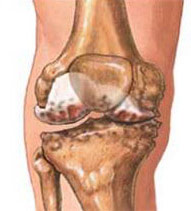
What is Osteoarthritis? Osteoarthritis is a common problem for many people after middle age. Osteoarthritis is sometimes referred to as degenerative, or wear and tear arthritis. It is the most common forms of arthritis. The disease causes cartilage breakdown found in joints. This breakdown removes the buffer between bones and the resulting bone against bone friction causes pain and eventual loss of movement. Bone spurs may form around the joint as the body’s response.
The symptoms of osteoarthritis are mainly pain, swelling, and stiffening of the knee. Osteoarthritis develops slowly, but may present with sudden attacks of knee pain. The pain of osteoarthritis is usually worse after activity. Some patients may have pain and stiffness on standing after a prolonged sitting period. Activities such as squatting and climbing of stairs become painful. In the late stages, the pain is worse with walking. The knee becomes difficult to straighten or bend fully.
How do you get it? There are a wide array of factors that cause the development and progression of the disease.
RISK FACTORS INCLUDE:
What are the treatments?
The symptoms of osteoarthritis are mainly pain, swelling, and stiffening of the knee. Osteoarthritis develops slowly, but may present with sudden attacks of knee pain. The pain of osteoarthritis is usually worse after activity. Some patients may have pain and stiffness on standing after a prolonged sitting period. Activities such as squatting and climbing of stairs become painful. In the late stages, the pain is worse with walking. The knee becomes difficult to straighten or bend fully.
How do you get it? There are a wide array of factors that cause the development and progression of the disease.
RISK FACTORS INCLUDE:
- Aging
- Obesity
- Joint injuries (sports, work or accidents)
- Genetics
What are the treatments?
- Weight management to relieve stress on weight-bearing joints
- Glucosamine Sulphate 1500mg per day
- Anti-inflammatory drugs and analgesics
- Injection of lubricants into the knee
- Arthroscopy to wash away the inflamed fluid, debris and loose fragments inside the joint. Abrasive-therapy to stimulate cartilage growth
- Osteotomy to straighten the leg to reduce the stress acting on the bad part of the knee.
- Partial knee replacements (unicompartmental knee replacement – replaces only the diseased portion of the joint)
- Total knee replacement (used when severe osteoarthritis is present)
Rheumatoid Arthritis
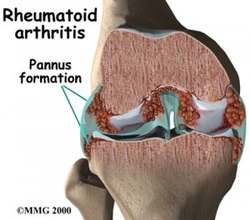
What is Rheumatoid Arthritis? Rheumatoid arthritis (RA) is a long-term disease that leads to inflammation of the joints and surrounding tissues. It can also affect other organs.
The cause of RA is unknown. It is considered an autoimmune disease. The body’s immune system normally fights off foreign substances, like viruses. But in an autoimmune disease, the immune system confuses healthy tissue for foreign substances. As a result, the body attacks itself.
RA can occur at any age. Women are affected more often than men.RA usually affects joints on both sides of the body equally. Wrists, fingers, knees, feet, and ankles are the most commonly affected. The course and the severity of the illness can vary considerably. Infection, genes, and hormones may contribute to the disease.
What are the causes?
The cause of RA is unknown. It is considered an autoimmune disease. The body’s immune system normally fights off foreign substances, like viruses. But in an autoimmune disease, the immune system confuses healthy tissue for foreign substances. As a result, the body attacks itself.
RA can occur at any age. Women are affected more often than men.RA usually affects joints on both sides of the body equally. Wrists, fingers, knees, feet, and ankles are the most commonly affected. The course and the severity of the illness can vary considerably. Infection, genes, and hormones may contribute to the disease.
What are the causes?
- Hereditary
- Cigarette
- Fatigue
- Loss of energy
- Lack of appetite
- Muscle and joint aches and stiffness
Adult Still's Disease

What is Adult Still Disease? Adult Still’s disease is a rare inflammatory condition that may lead to chronic arthritis and other complications. A separate condition, formerly known as Still’s disease, is now commonly referred to as systemic onset juvenile rheumatoid arthritis (JRA) or juvenile idiopathic arthritis (JIA).
What are the causes?
Prednisone may be used for more severe cases.
If the disease persists for a long time (becomes chronic), medicines that suppress the immune system might be needed.
What are the causes?
- Infection with a microbe
- Hypersensitive
- Autoimmune Disorder
- Fatigue
- Come and go fever
- Lack of appetite
- Weight loss
Prednisone may be used for more severe cases.
If the disease persists for a long time (becomes chronic), medicines that suppress the immune system might be needed.
Psoriatic Arthritis
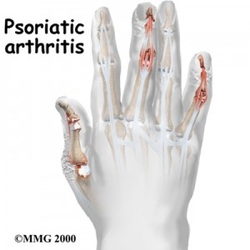
What is Psoriatic Arthritis? Osteoarthritis is a condition that affects the joints.
Three key characteristics of osteoarthritis are:
What are the causes?
Prednisone may be used for more severe cases.
If the disease persists for a long time (becomes chronic), medicines that suppress the immune system might be needed.
Three key characteristics of osteoarthritis are:
- mild inflammation of the tissues in and around the joints
- Damage to cartilage, the strong, smooth surface that lines the bones and allows joints to move easily and without friction
- Bony growths that develop around the edge of the joints
What are the causes?
- Genetic Immune Disorder
- Arthritis of the spine
- Rheumatoid Arthritis
- Joint stiffness
- Inflammation of the tendons
- Chest pain
Prednisone may be used for more severe cases.
If the disease persists for a long time (becomes chronic), medicines that suppress the immune system might be needed.
Gonococcal Arthritis
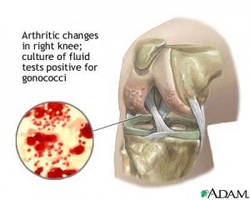
What is Gonococcal Arthritis? Gonococcal arthritis is inflammation of a joint due to a gonorrhea infection.
What are the causes?
What are the causes?
- Bacterial infection of a joint
- Fever
- Lower abdominal pain
- Pain in the hand due to tendon inflammation
- Single joint pain
- Skin rash